
Caring for Historic Brickwork and Lime Mortar
Why Old Walls Were Made to Breathe
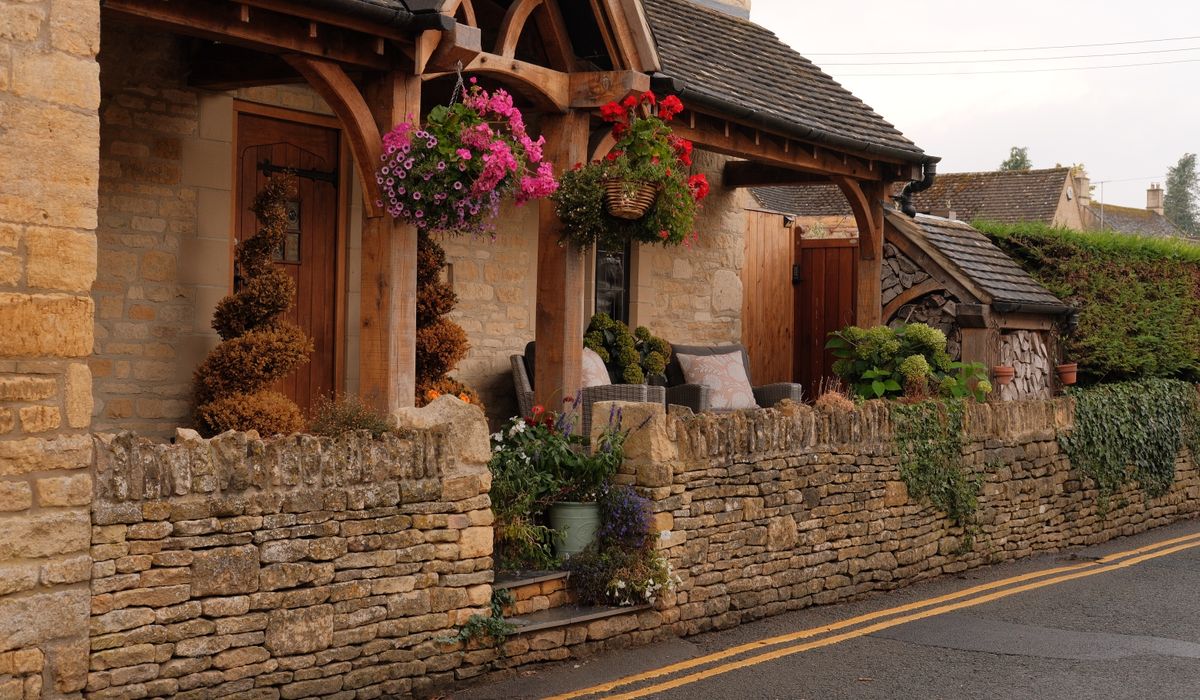
If you live in a cottage, a Georgian townhouse or a manor house built before the First World War, the chances are your walls are solid — one or two leaves of brick with no cavity, sometimes half a metre thick. That kind of construction only works because the whole assembly is designed to get wet and then dry out again. Rain soaks in, and the wall releases moisture slowly through evaporation from its face.
Lime mortar is central to that cycle. It is softer, more porous and more flexible than the bricks around it. It absorbs movement as a building settles, and it acts as the sacrificial element in the wall: when water needs to escape, it damages the mortar rather than the brick. In a wall built this way, a hairline crack in a lime joint is not a failure — it is the system doing its job.
The Trouble with Cement
Much of the damage you see on historic brickwork comes from well-meaning twentieth-century repairs. Portland cement mortar, and cement-rich renders, are harder, denser and far less flexible than the bricks they sit beside. Water that once passed harmlessly through lime joints is trapped behind a cement skin.
Trapped moisture has to go somewhere, and it goes into the brick. In winter it freezes, expands and blows the face off — the flaking, crumbling surfaces known as spalling. Cement pointing also cracks as a building moves, and once cracked it lets water in while still refusing to let it out. The result is a wall that looks well maintained while quietly falling apart behind its joints. If your house already has cement pointing or a hard render, do not attack it with a breaker. Removal takes care, patience and a skilled hand.
Reading Your Brickwork Before You Touch It
Bricks vary enormously, and the right repair depends on what you have. Hand-made, clamp-fired and early machine-made bricks are often soft and uneven, with a rich range of colours and a slightly irregular face. Later Victorian and Edwardian bricks are harder and denser. Pressed and gauged brickwork, found on fine facades, is a specialist field all its own.
Before ordering anything, spend an afternoon looking closely:
- Test the brick with a fingernail or a copper coin. If it scratches easily, it is soft, and it needs a soft mortar to match.
- Look at the existing mortar. Note its colour, its aggregate — sharp sand, grit, ash, crushed shell — and whether it is lime-rich, chalky or grey.
- Record the joint profile: flush, slightly recessed, weather-struck or tuck-pointed.
- Check for cement render, modern masonry paint or waterproof coatings, all of which trap moisture.
- Confirm whether the building is listed or in a conservation area. Listed building consent is usually required for repointing, and conservation officers are generally allies rather than obstacles.
Pointing Done Properly
Repointing is not a cosmetic job; it is a moisture-management job, and the mix matters as much as the technique.
For most historic brickwork, use a lime putty mortar with a well-graded sharp sand, roughly one part lime to two and a half or three parts sand by volume. On exposed sites or in wetter parts of the country, a natural hydraulic lime such as NHL 2 or NHL 3.5 may be more appropriate, though it should still be weaker and more permeable than the brick. Avoid building sand with heavy clay and plasticiser content, and never add cement "for strength". Strength is the last thing you want.
Rake out the joints by hand with a plugging chisel and mallet, to a depth of around two to two and a half times the joint width, and no less than 20mm, until you reach sound mortar. Dampen the wall so the new mortar does not dry out too fast. Finish the joint flush or very slightly recessed — never proud, where water can sit on it. Work in mild weather, between roughly 5°C and 25°C, and protect fresh work from frost, hot sun and drying wind with hessian. Lime cures over weeks, not days, so give it time.
Replacing Bricks and Managing Damp
Where a brick is beyond saving, replace it like for like. Match the size, colour, texture and firing, and bed it in lime mortar of the same specification as the pointing. Reclaimed bricks and specialist hand-made copies are both sensible options, and a slightly imperfect match is far better than a hard modern brick that will not move with the wall.
Salt staining on the surface, known as efflorescence, is usually a sign of moisture moving through the wall rather than a problem in itself. Before blaming the brickwork, look at the water management around it: overflowing gutters, leaking downpipes, high ground levels bridging the damp course, and hard paving that splashes water back at the wall. A surprising proportion of "damp wall" problems turn out to be drainage problems.
Finding the Right Help and Thinking in Decades
Look for a contractor with demonstrable experience in conservation work, and ask to see a sample panel before agreeing to anything. A good panel of lime pointing on a hidden patch of wall will tell you more than any brochure. If the building is listed, talk to your conservation officer early and take their advice seriously.
Above all, think in decades rather than weekends. Repoint in sections as joints fail rather than stripping a whole elevation at once, keep an eye on gutters twice a year, and resist the urge to seal or waterproof anything. A historic wall kept in lime and allowed to breathe will comfortably outlast all of us — and it will look better doing it.

4 Comments